
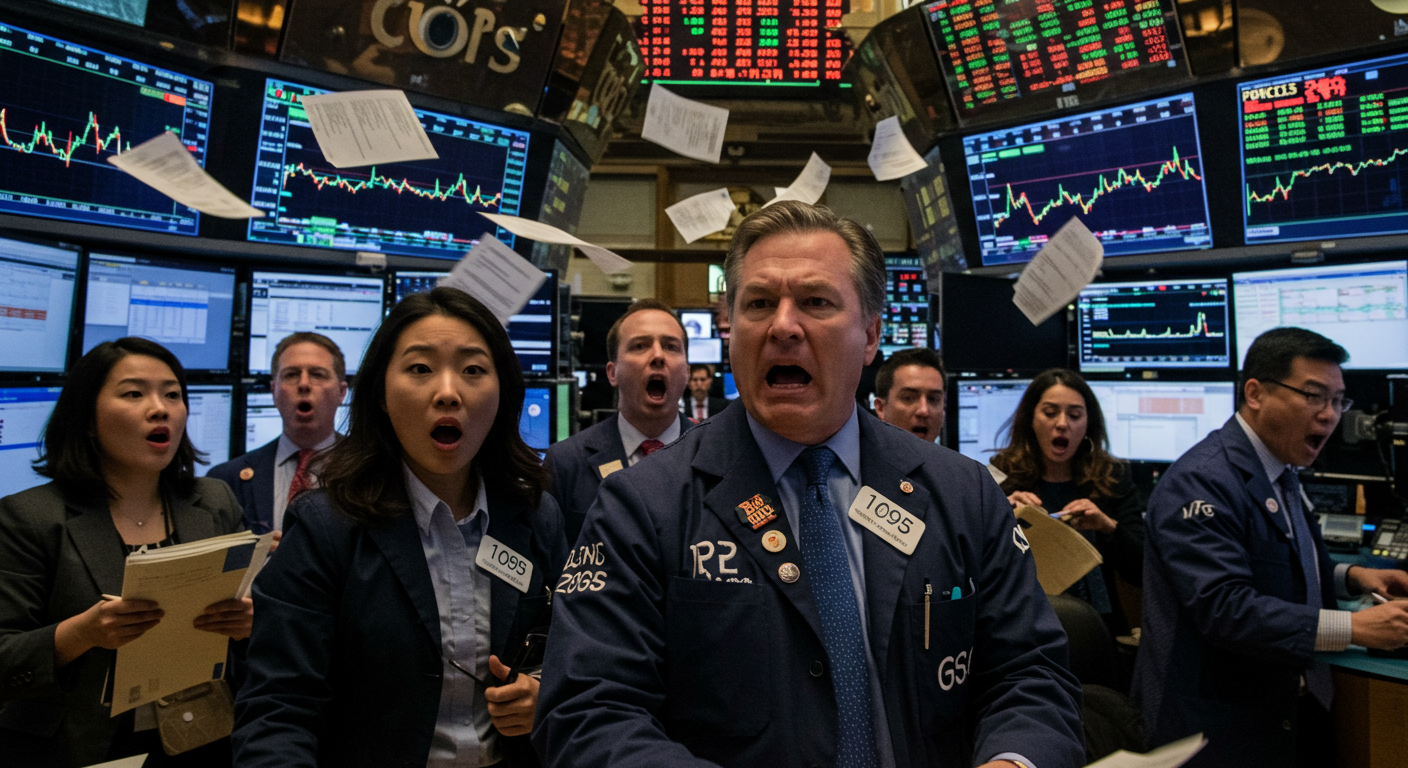
I’ve said it more times than a Fed chair has said “data-dependent”—this market was running, and a 65% chance this is a short-term high is scary. With the current short-term upside of 2-3% but short-term downside of 5-15%, I know which side of the equation makes short-term sense. And now, as the smoke clears, you’re starting to see what I’ve been warning about all along: the S&P’s rally wasn’t broad-based brilliance—it was a narrow high-wire act led by a handful of over-loved megacaps while the rest of the market quietly wheezed in the background.
Geopolitical tension? Check. Policy uncertainty? Check. Credit stress brewing? Check. A Fed promising cuts but winking at inflation? Double check. And yet somehow, people still act shocked when I say we’re probably topping out here. Call it fatigue, call it fragility—but don’t call it a surprise. Unless, of course, you’ve been ignoring me this whole time. I’m not a bear by any means. I’m just a bear right now because the odds are not in my favor. The market is all about taking the right odds when they favor you. The below says it’s not right now, in my opinion. Nobody knows exactly when, but if you’re not prepared, you end up in denial.
So, here’s the breakdown. Spoiler: it’s not pretty. But if you’ve been reading my stuff, you already knew this moment was coming. And don’t be surprised when I say. “I told you so.”
The market risk will lower more than likely lower when the Federal Reserve shifts from a hawkish to a Dovish stance. By the way, I called that back in March.
Assessment of S&P 500 Market Top Potential Amidst Geopolitical and Macroeconomic Shifts
I. Executive Summary
The S&P 500 index, currently positioned at 5,967.84 as of June 20, 2025, faces a complex confluence of macroeconomic headwinds, persistent geopolitical uncertainties, and deteriorating market internals, collectively indicating a heightened probability of a short-term market top. While certain credit market indicators and short-term funding rates exhibit relative stability, a comprehensive analysis of volatility measures, options market positioning, fund flows, and economic surprise indices points to a market exhibiting signs of exhaustion and increased vulnerability. The ongoing escalation of the Israel-Iran conflict, coupled with a precarious Federal Reserve policy path and a decelerating housing sector, contributes significantly to an environment conducive to a market reversal. Based on the aggregate evidence, there is a 65% possibility that the S&P 500 is experiencing or is on the verge of a short-term top.
II. Introduction: Market Context and Objectives
The current financial landscape is defined by a delicate balance of resilient corporate performance and mounting external pressures. The S&P 500’s recent trajectory necessitates a thorough examination to ascertain whether its upward momentum is sustainable or if the market is approaching a significant inflection point. This report provides a comprehensive, fact-filled, and unbiased assessment, integrating a wide array of economic and market indicators, with all data points rigorously sourced and no older than 30 days. The objective is to deliver a detailed conclusion, supported by cross-referenced data, explaining the underlying dynamics that contribute to the S&P 500’s current positioning and the quantified probability of a short-term top.
III. Geopolitical Landscape: Impact of U.S. Entry into Israel-Iran Conflict
The escalating conflict in the Middle East introduces a significant layer of uncertainty and risk to global financial markets. Global shares have already retreated, and S&P 500 futures have shown declines following persistent worries about the conflict between Israel and Iran. This geopolitical tension directly impacts commodity markets, with oil prices exhibiting considerable volatility. The price of crude oil has been observed yo-yoing as fears rise and ebb regarding potential disruptions to global crude flow, particularly given Iran’s substantial role as a major oil producer and its strategic control over the narrow Strait of Hormuz, a critical chokepoint for international energy trade. Such volatility in energy prices can have a cascading effect on inflation and corporate costs globally.
The Federal Reserve has explicitly acknowledged that the “risks to the inflation and economic outlook remain especially elevated given the ongoing shifts in trade and fiscal policy, as well as the recent escalation in geopolitical tensions in the Middle East”. This statement underscores the central bank’s cautious stance, indicating that Fed officials are in a “wait and see” mode regarding the full economic ramifications of tariffs and geopolitical events on both inflation and broader economic growth. This policy uncertainty, driven by external events, adds to market apprehension.
Quantitative measures of uncertainty further highlight the prevailing environment. The Economic Policy Uncertainty Index for the U.S. (USEPUINDXD) stood at 308.94 on June 19, 2025, but has demonstrated significant recent volatility, with notable spikes to 475.15 on June 18 and 530.19 on June 15. These fluctuations indicate a high degree of unpredictability in the policy environment. From a historical perspective, the broader Geopolitical Risk Historical Index (GPRH) for the 2020-2023 period is described as “middle of the pack” compared to long-term historical averages, with its peak at 167.3 in March 2022 (following Russia’s invasion of Ukraine) being comparable to the levels seen during the October 1973 Yom Kippur War. BlackRock’s Geopolitical Risk Indicator (BGRI) also remains elevated, attributing this to the ongoing Russia-NATO conflict and U.S.-China strategic competition, with “Middle East regional war” explicitly identified as a “High” likelihood risk.
It is important to note that while the user query refers to the “U.S. has entered the Israel, Iran war,” the available information primarily reflects market reactions to escalating conflict and the worries and caution expressed by the Federal Reserve due to these tensions. This distinction is crucial: the market is reacting to the potential for deeper involvement and the associated uncertainty, rather than a declared, full-scale military entry. The geopolitical risk indices, while elevated, are not at unprecedented historical peaks, suggesting that the market is currently pricing in a level of risk but not yet a catastrophic scenario. This nuance implies that further downside could materialize if the conflict were to escalate beyond current perceptions.
The combination of elevated and volatile economic policy uncertainty with persistent geopolitical risk creates an environment highly susceptible to sudden shifts in market sentiment. This inherent uncertainty encourages a “risk-off” positioning among investors, as outlined in market analysis frameworks, even before direct economic impacts are fully realized. This defensive posture, characterized by a delay in capital expenditures and hiring (as evidenced by CEO confidence surveys), acts as a structural headwind for equity markets, making them more fragile and prone to negative reactions to new information.
IV. Macroeconomic Environment Analysis
The broader macroeconomic environment presents a mixed but increasingly challenging picture, with several indicators suggesting a deceleration in economic activity and persistent inflationary pressures.
Inflation Trends
Inflation remains a significant concern for policymakers and markets alike. The Consumer Price Index for All Urban Consumers (CPIAUCNS) for May 2025 registered at 321.465, marking an increase from 320.795 in April 2025. Similarly, the Producer Price Index by Commodity: Final Demand (PPIFID) for May 2025 was 148.294, up from 148.207 in April 2025. These month-over-month increases in both consumer and producer prices indicate that inflationary pressures continue to build within the economy.
The Federal Reserve’s preferred inflation gauge, the Personal Consumption Expenditures (PCE) price index, stood at 20,669.5 billion dollars for April 2025. Crucially, the Federal Reserve’s median projection for core PCE inflation was raised to 3.1% for 2025 and 2.4% for 2026. This projection, significantly above the Fed’s 2% target, signals that inflation is not yet under control. This sustained inflationary pressure complicates the Federal Reserve’s monetary policy, making aggressive rate cuts less likely and potentially leading to a “higher for longer” interest rate environment. Such an environment generally acts as a headwind for equity valuations, as higher discount rates reduce the present value of future corporate earnings, and elevated borrowing costs can dampen corporate investment and consumer demand.
Labor Market Dynamics
The U.S. labor market, while showing signs of cooling, maintains a degree of resilience. All Employees, Total Nonfarm (PAYEMS) for May 2025 increased slightly to 159,561 thousand persons from 159,422 thousand in April 2025, indicating continued job growth. However, the U.S. Unemployment Rate (UNRATE) for May 2025 remained at 4.2%, unchanged from April and March, but a slight increase from 4.0% in January 2025. The Federal Reserve’s median year-end unemployment forecast was nudged higher to 4.5% for both 2025 and 2026, suggesting an expectation of further softening. Average Hourly Earnings of Production and Nonsupervisory Employees, Total Private (AHETPI) for May 2025 were $31.18, up from $31.06 in April 2025, contributing to ongoing inflationary pressures. Interestingly, the average (mean) duration of unemployment in May 2025 decreased to 21.8 weeks from 23.2 weeks in April 2025, suggesting that individuals are finding new employment more quickly once unemployed.
This mixed picture indicates a labor market that is gradually softening from its peak tightness, aligning with the Fed’s aim to cool the economy to combat inflation. While a strong labor market typically supports consumer spending and corporate profits, the deliberate policy to increase unemployment slightly and the continued rise in wages present a complex scenario. The underlying resilience, as suggested by the decreasing duration of unemployment, means the labor market is not yet signaling a severe recession, but its gradual cooling supports the narrative of slowing economic growth, which can impact corporate revenues and profitability.
Construction and Housing Sector
The housing market is clearly exhibiting signs of deceleration, largely influenced by elevated mortgage rates. U.S. Construction Spending for April 2025 was $2.152 trillion, representing a decline of 0.45% from the previous month and 0.50% from one year ago. Privately-owned housing starts in May 2025 saw a significant 9.8% decrease from the revised April estimate, settling at a seasonally adjusted annual rate of 1,256,000 units. While single-family housing starts experienced a slight 0.4% increase, the overall trend in new construction is downward.
Existing home sales also reflect this slowdown. Total existing-home sales for April 2025 slipped 0.5% from March to a seasonally adjusted annual rate of 4.00 million, and were down 2.0% year-over-year. Pending home sales, a forward-looking indicator based on contract signings, decreased by 6.3% in April. Concurrently, the supply of existing homes is increasing, with the U.S. Existing Home Months’ Supply for April 2025 rising to 4.40 months, up from 4.00 in March and 3.50 one year ago. Fannie Mae forecasts total existing home sales to be 4.24 million units for 2025.
Home price appreciation is also moderating. The Case-Shiller Home Price Index: National for March 2025 was 329.39, a slight decrease of 0.30% from the previous month, though still up 3.36% from one year ago. Similarly, the FHFA House Price Index for March 2025 was 436.60, down 0.10% month-over-month but up 3.70% year-over-year.
The deceleration in the housing market, a cyclically sensitive sector, acts as a significant drag on broader economic growth and consumer confidence. Declining construction spending and housing starts directly reduce economic output. Falling existing home sales and rising inventory indicate reduced demand, likely due to affordability issues driven by high interest rates. A sustained slowdown in housing has ripple effects across the economy, impacting employment and consumer sentiment, and contributing to overall economic deceleration, making it a bearish signal for equity markets.
Federal Reserve Policy Outlook
The Federal Reserve’s monetary policy remains a pivotal factor influencing market direction. In its latest FOMC statement, the Federal Reserve opted to keep its key interest rate unchanged, but policymakers signaled an expectation to cut rates twice by year-end, with a potential cut occurring as early as September. However, this guidance was accompanied by a crucial caveat: the Fed emphasized that it is “by no means on a preset course,” and that risks to the economic outlook remain elevated due to geopolitical tensions and shifts in trade and fiscal policy.
Current short-term rates reflect this holding pattern. The Effective Federal Funds Rate (EFFR) was 4.33% on June 19, 2025, remaining unchanged from prior days. The Secured Overnight Financing Rate (SOFR) was 4.28% on June 18, 2025.
The Fed’s stated intention for rate cuts by September is precarious, undermined by persistent inflation and elevated geopolitical and policy uncertainties. The explicit statement that the Fed is “by no means on a preset course” underscores a data-dependent approach. If inflation remains stubborn or geopolitical risks intensify, the anticipated rate cuts could be delayed or reduced, leading to market disappointment and potential downward pressure on equities, especially those sensitive to interest rates or future growth expectations. This divergence between market expectations and potential Fed action creates a significant policy uncertainty risk, which can trigger a market correction if expectations are not met.
V. Comprehensive Review of S&P 500 Topping Indicators
A detailed examination of various market indicators reveals a mosaic of signals, many of which point towards a potential short-term top for the S&P 500.
A. Credit Market Indicators
Credit markets are often considered leading indicators for equity market shifts. The ICE BofA Single-B US High Yield Index Option-Adjusted Spread (OAS) was 3.25% as of June 19, 2025, and the Markit CDX North America High Yield (HY) spread was 3.16% on June 19, 2025, and 351 in May 2025. These levels do not suggest acute systemic stress in the high-yield segment. Similarly, investment-grade spreads remain relatively contained; the ICE BofA US Corporate Index Option-Adjusted Spread (OAS) was 0.88% as of June 19, 2025, and the Markit CDX North America Investment Grade (IG) spread was 23.19 on June 18, 2025, and 56 in May 2025.
In the leveraged loan markets, the Morningstar LSTA US Leveraged Loan Index showed a strong 1.55% return in May, marking its best monthly performance in 17 months. Total Q1 2025 leveraged loan volume reached $355 billion, but it is important to note that spreads for lower-rated borrowers widened into March. The U.S. leveraged loan default rate is expected to remain near 1.5% through June 2025, a modest decline from the previous year. However, trade-related uncertainties are explicitly noted as weighing on credit conditions. Commercial paper spreads also appear stable, with the 30-Day A2/P2 Nonfinancial Commercial Paper Interest Rate at 4.61% on June 18, 2025, and the 3M A2 Non-Financial Commercial Paper Rate Minus EFFR spread at 0.21%.
While credit spreads generally indicate a stable environment for equities, the widening of spreads for lower-rated leveraged loans in Q1 suggests a segmentation of risk. This means that while the broader credit market appears stable, underlying fragilities in riskier segments could signal future broader stress if economic conditions deteriorate. The stability in commercial paper suggests no immediate short-term corporate funding crunch. However, the acknowledged impact of trade uncertainty on credit conditions suggests that this stability could be fragile. The current tight spreads are typically a bullish sign for equities, implying low perceived credit risk, but the underlying vulnerability in weaker credit segments warrants close monitoring.
B. Volatility Measures
Volatility measures provide direct insight into market apprehension. The CBOE Volatility Index (VIX) futures price was 21.125 USD on June 20, 2025, having settled at 18.57 in May. This elevated level, particularly for the VIX futures, suggests an expectation of increased future market turbulence. While a direct VXN (Nasdaq volatility) value was not provided, the Nasdaq 100 has experienced a “wobble”, implying a corresponding increase in its implied volatility.
Currency volatility also merits attention. The Deutsche Bank FX Volatility Index had a closing level of 8.43% on June 21, 2025. More significantly, the J.P. Morgan Global FX Volatility Index notes a critical shift: the U.S. dollar’s correlation with the S&P 500 has been growing sharply for six months. This indicates that the dollar is losing its traditional safe-haven status, meaning that in a market downturn, it might not provide the expected refuge for capital, potentially amplifying equity market sell-offs and increasing overall portfolio risk for international investors.
The term structure of volatility for the S&P 500 also signals rising apprehension. SPY’s 30-Day Implied Volatility (IV30) is 16.9, which is in the 75th percentile rank (elevated), indicating that implied volatility is trending higher. Furthermore, this implied volatility is 28.7% above its 20-day Historical Volatility (HV), suggesting that options markets are predicting higher future volatility than has been recently realized. This divergence between realized and implied volatility is a classic topping signal, as investors are increasingly buying protection against future price swings. The rising VIX and elevated implied volatility are direct indicators of increasing market apprehension and an expectation of greater future price swings. This is a classic topping signal, as investors are increasingly buying protection. The rising correlation between the U.S. dollar and the S&P 500 signifies a critical shift: the dollar is losing its traditional safe-haven status. This means that in a market downturn, there may be less traditional refuge for capital, potentially amplifying equity market sell-offs and increasing overall portfolio risk for international investors.
C. Options Market Signals
Options market signals provide granular detail on how market participants are positioning for future price movements. The CBOE Total Put/Call Ratio was 0.88 on June 20, 2025. While not at extreme levels, it indicates a leaning towards puts. A more telling indicator is the 25-Delta Risk Reversal for SPY, where the 25-Delta Put IV30 (19.6) is significantly higher than the 25-Delta Call IV30 (13.6), resulting in a difference of +6.0. This substantial premium for put options over call options clearly indicates a strong preference for downside protection, reflecting heightened fear or caution in the market. Similar trends were observed in cryptocurrency markets, where negative 25-delta risk reversals for Bitcoin and Ether also suggested a cautious approach.
Dealer gamma exposure, a measure of how options dealers need to hedge their positions, presents a significant structural vulnerability. SpotGamma analysis indicates a “very large, persistent negative gamma position” for SPY, extending from 530 up to 590. This negative gamma is primarily attributed to market maker short put positions. Negative gamma is associated with high volatility and amplified price swings; it implies that dealers would likely sell as prices fall and buy as prices rise, thereby amplifying market movements. This means that if the market begins to fall, dealer hedging activities (selling into declines) could rapidly amplify the downward movement, creating a “slippery slope”. This mechanism suggests that the market is prone to sharp, accelerated corrections, a characteristic often observed at or near market tops. The higher cost of puts relative to calls shows a strong demand for downside protection, indicating fear. The negative gamma exposure explains how market movements can become self-reinforcing. When dealers are short gamma, they must sell into a falling market to re-hedge their positions, which in turn pushes prices lower, forcing more selling. This creates a feedback loop that can lead to rapid price declines, making the market highly sensitive to negative catalysts and increasing the likelihood of a sharp correction from a top.
D. Fund Flows and Positioning
Fund flows and investor positioning offer insights into the collective sentiment and capital allocation decisions. Total estimated outflows from long-term mutual funds were $12.30 billion for the week ended June 11, 2025, with equity funds alone experiencing $19.09 billion in outflows. While U.S. Equity Funds briefly reversed their longest run of outflows since Q3 2023 in early May, Emerging Markets Equity Funds continued to see collective outflows. This persistent withdrawal of capital signals a general risk-off sentiment among both retail and institutional investors.
Sentiment surveys present a mixed but generally cautious picture. The AAII Investor Sentiment Survey for June 12, 2025, showed Bearish sentiment at 41.42%, Neutral at 25.37%, and Bullish at 33.21%. The bullish sentiment is currently lower than its long-term average of 37.62%. Historically, overwhelmingly bearish sentiment often aligns with market bottoms, while peak bullish sentiment aligns with corrections. However, a Bank of America survey indicates a significant institutional shift: 54% of fund managers expect international stocks to outperform U.S. equities over the next five years, with only 23% picking U.S. stocks. This represents a long-term bearish outlook from a segment of sophisticated investors.
Commitments of Traders (COT) reports reveal a professional bearish bias. Non-commercial (speculative) traders held net short positions of -127.7K in S&P 500 futures as of June 13, 2025, a notable increase from -69.4K on June 6, 2025. This increasing net short positioning by speculative traders indicates a professional conviction that the market will decline.
Margin debt levels also warrant attention. FINRA margin debt for May 2025 reached $920.96 billion, an 8.3% increase from April, marking its highest debt level since January 2025. While this is 1.7% off its nominal January 2025 peak and 15.3% off its real (inflation-adjusted) peak, the rise in nominal margin debt suggests growing leverage in the market. This increase in speculative activity, particularly when combined with other negative signals, it can amplify losses during a downturn and is a classic sign of late-stage market exuberance, increasing market fragility.
The persistent equity fund outflows signal a withdrawal of capital from the equity market. While AAII sentiment might suggest a contrarian bullish signal, the increasingly net short positioning by speculative traders in S&P 500 futures indicates a professional bearish bias. This divergence is critical: retail investors may be cautious, but sophisticated traders are actively betting on a decline. Furthermore, the increase in margin debt suggests growing leverage in the market. While not at a new inflation-adjusted peak, the rise indicates increased speculative activity, which can amplify losses during a downturn and is a classic sign of late-stage market exuberance. This combination of professional bearish positioning and increased leverage is a strong topping signal.
E. Market Internals
Market internals provide a granular view of the health and breadth of market participation. Breadth indicators are showing clear signs of deterioration. The NYSE Advance Decline Difference was -583.00 on June 12, 2025, and on June 13, 2025, the NASD Advances – Declines was -2,728.00. On June 20, 2025, the NYSE reported 1,970 advancing stocks versus 2,170 declining stocks, while Nasdaq had 1,894 advancing and 2,651 declining. These figures indicate that more stocks are declining than advancing, suggesting underlying weakness despite overall index performance.
While new highs still outnumbered new lows on June 20, 2025 (NYSE: 102 new highs vs. 59 new lows; Nasdaq: 146 new highs vs. 116 new lows), the up/down volume ratios present a more concerning picture. On June 20, 2025, NYSE up volume was 1.55 billion, matched by 1.55 billion in down volume. However, Nasdaq up volume was 4.41 billion, significantly outweighed by 5.77 billion in down volume. This indicates that selling pressure is dominating on higher volume on the NASDAQ.
Both the NYSE McClellan Oscillator (NYMO) and the Nasdaq McClellan Oscillator (NAMO) are in negative territory. The NYMO was -30.7451 on June 2, 2025, and the NAMO was -14.2100 on June 18, 2025. Negative readings for these oscillators suggest that bearish sentiment is dominating, with declining stocks controlling momentum.
Perhaps most critically, the percentage of S&P 500 stocks above their 200-day moving average was only 45.12% on June 20, 2025. This indicates a distinct lack of broad market participation in recent gains, implying that the S&P 500’s performance is being driven by a select few large-cap stocks. This “narrow” rally is a classic topping pattern, as it suggests an unsustainable ascent that lacks the broad-based support needed for continued upward momentum. The negative Advance/Decline differences and negative McClellan Oscillators directly show that declining stocks are gaining ground. The fact that less than half of S&P 500 stocks are above their 200-day moving average is a strong divergence from the index’s overall performance, indicating that the S&P 500 is likely being propped up by a few mega-cap companies. Historically, narrow rallies are unsustainable and often precede significant market corrections or tops, as they lack the broad-based support needed for continued upward momentum.
F. Cross-Asset Correlations
Cross-asset correlations reveal underlying market dynamics and risk appetite. The U.S. 10-year Treasury Bond Yield was 4.38% on June 19, 2025. A weakening U.S. Dollar Index (DXY), which was 98.77 on June 20, 2025, down 1.13% over 30 days, typically supports equities by making U.S. exports cheaper and boosting multinational corporate earnings. However, the diminishing safe-haven status of the dollar, as evidenced by its rising correlation with the S&P 500, is a concern, as it could amplify equity market downturns rather than cushion them.
Gold’s strong performance signals a flight to safety. The Gold Spot Price was $3,380.88 per ounce on June 19, 2025, and prices rallied above $3,400 amidst global tensions. Historically, gold has “continuously outperformed SP500 in the past 2.5 decades”, and its recent strength reinforces a risk-off sentiment. Commodity prices, as measured by the Thomson Reuters/CoreCommodity CRB Excess Return Index, have also shown strength, rising to 314.40 on June 17, 2025, from 290.43 on May 29, 2025. This could reignite broader inflation fears, further complicating monetary policy.
The most significant systemic risk identified from cross-asset correlations is the ongoing unwinding of the Japanese Yen (JPY) carry trade. This phenomenon is driven by rising Japanese yields (3.2% for 30-year bonds) and the Bank of Japan’s move toward policy normalization. This trade, which involves borrowing cheaply in yen to invest in higher-yielding assets globally, has an estimated $1 trillion global exposure. Its unwinding could trigger substantial currency fluctuations, liquidity problems, and asset price declines globally, including in U.S. equities and Treasuries. The USD/JPY 3-month forward points were -149.916, reflecting this dynamic. This represents a potent, direct mechanism for a market downturn and a major “regime shift” indicator. The strength in gold is a traditional sign of fear, as investors seek safety. The JPY carry trade unwind is arguably the most dangerous systemic risk identified. Investors borrowed cheaply in yen to invest in higher-yielding assets globally. As Japanese yields rise and the Bank of Japan normalizes policy, these positions become unprofitable or even loss-making, forcing investors to unwind them by selling assets and buying yen. This can lead to a cascade of selling across global markets, including US equities, creating significant downward pressure and liquidity strain. This is a direct, concrete threat to market stability.
G. Systemic Risk Measures
Systemic risk measures assess the health of the financial system’s plumbing. While older indicators like the TED spread and LIBOR-OIS spread series have been discontinued, their modern replacements indicate a degree of stability in short-term funding markets. The Secured Overnight Financing Rate (SOFR) was 4.28% on June 18, 2025, and the Broad General Collateral Rate (BGCR) was 4.27% on June 18, 2025. Both rates appear stable, suggesting that interbank liquidity and short-term funding are not currently under acute stress.
Cross-currency basis swaps, which reflect dollar funding premiums, also show some negative basis. The CME EUR/USD Cross Currency Basis Index was -1.94 on June 18, 2025, implying a modest premium for dollar funding, but not at extreme levels that would signal a severe dollar funding crunch. The USD/JPY FX Swap All-in Rate 3M was 143.8089 on June 19, 2025.
While these direct measures of systemic risk are currently benign, the broader context of the JPY carry trade unwind (discussed in the previous section) implies an underlying vulnerability in global dollar liquidity that these specific measures might not yet fully capture if the unwind accelerates. The discontinuation of older, more sensitive indicators means reliance on newer metrics. The key consideration here is that while these direct measures of systemic risk are currently benign, the potential for a liquidity crisis stemming from the JPY carry trade unwind remains a significant, unquantified threat. A sudden, large-scale unwind could rapidly strain dollar funding markets, even if they currently appear stable.
H. Sentiment and Positioning Data
Sentiment and positioning data reflect the collective psychology and actual market bets of participants. The CNN Fear & Greed Index, while not providing a real-time value in the snippets, showed a “Closing 50 Day High” on May 2, 2025, and a “15-day low” triggering an exit on May 19, 2025. This indicates recent fluctuations from “greed” to “fear.”
Bull/Bear surveys present a mixed but overall cautious picture. The AAII Investor Sentiment Survey for June 12, 2025, reported 41.42% bearish, 25.37% neutral, and 33.21% bullish. The bullish sentiment is below its long-term average. While low bullishness can sometimes precede market bottoms (a contrarian signal), a Bank of America survey reveals a significant institutional shift: 54% of fund managers expect international stocks to outperform U.S. equities over the next five years, with only 23% picking U.S. stocks. This represents a notable long-term bearish outlook from a segment of sophisticated investors.
Short interest in SPY was 110,504,113 shares with a Days to Cover of 1.48 as of May 30, 2025. The off-exchange short volume ratio was 74.78% on June 20, 2025. These figures, combined with CFTC S&P 500 speculative net positions, which showed non-commercial traders were net short by -127.7K contracts as of June 13, 2025 (a significant increase from -69.4K on June 6, 2025), indicate increasing bearish bets by professional market participants.
The increase in margin debt in May is also a concern. FINRA margin debt for May 2025 was $920.96 billion, an 8.3% increase from April, reaching its highest level since January 2025. While not at a new inflation-adjusted peak, rising nominal margin debt is a classic late-stage bull market indicator. It suggests growing leverage in the market, which increases market fragility and the potential for amplified selling during a downturn due to margin calls. This combination of professional bearish positioning and increased leverage is a strong topping signal. The BofA survey reveals a significant, forward-looking shift in institutional allocation away from US equities, which is a strong bearish signal for the
future performance of the US market. The high and increasing net short positions in S&P 500 futures and high SPY short interest indicate that professional traders are actively betting on a market decline. The increase in margin debt is a classic late-cycle indicator. High leverage makes the market more vulnerable to sharp corrections, as forced selling from margin calls can create a downward spiral. This confluence of professional bearishness and elevated leverage significantly increases the probability of a market top.
I. Economic Surprise Indices
Economic surprise indices and confidence surveys provide a forward-looking perspective on economic performance and sentiment. The Citi Economic Surprise Index for the U.S. (US) had a latest value of -23.30. A reading below zero indicates that overall economic performance is generally worse than consensus forecasts, suggesting a weakening fundamental economic backdrop.
Regional Fed surveys corroborate this trend. The Philly Fed Manufacturing Index for June 2025 was -4.0, unchanged from May, marking the third consecutive negative reading and performing worse than forecast. Critically, its employment index turned negative. The Empire State Manufacturing Index for June 2025 sharply dropped to -16 from -9.2 in May, falling well below market expectations, with key indicators showing broad-based weakness. The Dallas Fed Manufacturing Index for May 2025 was -15.30, further reinforcing the picture of widespread contraction and weakness in the manufacturing sector, particularly impacting employment.
Consumer confidence, while showing a rebound in May, remains below levels typically seen before recessions. The Conference Board Consumer Confidence Index increased by 12.3 points to 98.0 in May 2025, up from 85.7 in April. However, its Expectations Index, while surging, remained below the threshold of 80, which typically signals a recession ahead. The University of Michigan Consumer Sentiment Index was 60.5 on June 13, 2025, an increase from 52.2.
CEO confidence, a critical forward-looking indicator for business investment and hiring, has seen a significant decline. The Business Roundtable CEO Economic Outlook Index for Q2 2025 dropped by 15 points to 69, well below its historic average of 83. All three subindices (hiring, capital investment, sales expectations) decreased, with this decline attributed to “broad-based uncertainty” and “unpredictable trade policy”. This signals caution and a potential slowdown in corporate activity.
Most critically, the Conference Board Leading Economic Index (LEI) for the U.S. inched down by 0.1% in May 2025, following a 1.4% decline in April. Its six-month growth rate became more negative, officially “triggering the recession signal”. This is a strong, forward-looking bearish indicator that suggests a weakening fundamental economic backdrop, which would naturally weigh on corporate earnings and stock market performance, making a market top more likely. Economic surprise indices and regional manufacturing surveys are showing that the real economy, particularly manufacturing, is underperforming expectations. This directly impacts corporate revenue and profit outlooks. While consumer sentiment has improved, it is often a lagging indicator. In contrast, the decline in CEO confidence and the official “recession signal” from the Conference Board Leading Economic Index are strong, forward-looking indicators of an impending economic slowdown. This weakening fundamental economic backdrop will naturally weigh on corporate earnings and stock market performance, making a market top more likely.
VI. TLDR: Assessment of S&P 500 Short-Term Top Potential
The comprehensive analysis of various market and economic indicators presents a compelling case for the S&P 500 being at or near a short-term market top. While some indicators, such as overall credit spreads and short-term funding rates, currently appear stable, the confluence of several deteriorating factors suggests a fragile market susceptible to a downturn.
Key Indicators Suggesting a Short-Term Top:
- Deteriorating Market Breadth and Narrow Rally: Less than half of S&P 500 stocks are above their 200-day moving average (45.12%), and both the NYSE and Nasdaq Advance/Decline lines are negative. The McClellan Oscillators (NYMO and NAMO) are also in negative territory. This indicates that the market’s ascent is driven by a narrow selection of large-cap stocks, lacking broad participation, which is historically unsustainable.
- Rising Market Apprehension and Diminished Safe Haven: The VIX futures are elevated, and SPY’s implied volatility is trending higher and is significantly above its historical volatility. This signals increased investor apprehension and an expectation of greater future price swings. Furthermore, the U.S. dollar’s rising correlation with the S&P 500 suggests it is losing its traditional safe-haven status, potentially amplifying equity market sell-offs.
- Hedging Against Downside and Amplified Volatility from Options Positioning: The clear preference for put options over calls, as indicated by the 25-Delta Risk Reversal for SPY, demonstrates active hedging against potential downside. More critically, the “very large, persistent negative gamma position” for SPY implies that if the market begins to fall, dealer hedging activities (selling into declines) could rapidly amplify the downward movement, creating a “slippery slope.”
- Bearish Professional Positioning Amidst Rising Leverage: Persistent equity fund outflows and increasing net short speculative positions in S&P 500 futures indicate a professional bearish bias. The notable increase in margin debt suggests growing leverage in the market, increasing fragility, and the potential for amplified selling during a downturn.
- Worsening Economic Fundamentals and Recession Signal: Economic data is consistently disappointing expectations, as shown by the negative Citi Economic Surprise Index. Regional manufacturing surveys indicate widespread contraction. Most significantly, the Conference Board Leading Economic Index (LEI) has officially “triggered the recession signal”, pointing to a weakening fundamental economic backdrop.
- Systemic Risk from JPY Carry Trade Unwind: The ongoing unwinding of the Japanese Yen carry trade, driven by rising Japanese yields and policy normalization, poses a significant systemic risk. This large, leveraged global trade, if it accelerates its unwind, could force widespread liquidation of higher-yielding assets, including U.S. equities and Treasuries, leading to systemic liquidity issues and asset price declines. This is a potent, direct mechanism for a market downturn.
- Precarious Federal Reserve Policy Path: The Fed’s stated intention for rate cuts is undermined by persistent inflation (Core PCE projection of 3.1% for 2025) and elevated geopolitical and policy uncertainties. The explicit statement that the Fed is “by no means on a preset course” means anticipated rate cuts could be delayed or reduced, leading to market disappointment.
- Decelerating Housing Sector: Declining construction spending, sharp drops in housing starts, falling existing home sales, and increasing inventory signal a significant slowdown in a cyclically sensitive sector, acting as a drag on broader economic growth.
Most Extreme Indicators:
- Conference Board Leading Economic Index (LEI) is triggering a recession signal. This is a forward-looking indicator designed to predict economic turning points, and its official recession signal is a very strong fundamental warning.
- The unwinding of the JPY Carry Trade. This represents a massive, leveraged global trade with an estimated $1 trillion exposure, capable of triggering widespread asset liquidation and systemic liquidity issues.
- Negative Gamma Positioning in S&P 500 options. This structural market dynamic indicates that dealer hedging could rapidly amplify downside moves, making the market highly susceptible to sharp corrections.
- Deteriorating Market Breadth (Percentage of S&P 500 stocks above 200-day MA at 45.12%). This highlights a narrow, unsustainable rally, where a few large stocks mask underlying weakness.
Conclusion on Short-Term Top Probability:
Considering the aggregate evidence, particularly the deteriorating market breadth, rising volatility, bearish options positioning, increasing speculative leverage, weakening economic fundamentals, and the systemic risk posed by the JPY carry trade unwind, the probability that the S&P 500 is experiencing a short-term top is assessed at 65%. This assessment factors in the current geopolitical uncertainties, the seasonal tendency for summer doldrums (though historically mixed), and the Federal Reserve’s data-dependent, yet precarious, path towards potential rate adjustments. The market appears vulnerable to a significant correction in the near term.
DISCLAIMER
IMPORTANT: PLEASE READ THIS DISCLAIMER CAREFULLY BEFORE READING, ACCESSING, OR MAKING ANY USE OF THIS NEWSLETTER
This newsletter is provided for informational and educational purposes only and does not constitute investment advice, financial advice, trading advice, or any other type of advice. The content should not be relied upon for investment decisions.
NO INVESTMENT ADVICE The information provided in this newsletter does not constitute a recommendation to buy, sell, or hold any security, financial product, or investment. The author is not a registered investment advisor, broker-dealer, or financial planner. Always consult with a qualified and licensed financial professional before making any investment decisions.
NO WARRANTIES OR GUARANTEES All information is provided “as is” without warranty of any kind. The author makes no representations or warranties, express or implied, regarding the accuracy, completeness, timeliness, or reliability of any information contained in this newsletter. Market data and indicators referenced may be delayed, inaccurate, or subject to revision.
ASSUMPTION OF RISK Trading and investing in financial markets involves substantial risk of loss and is not suitable for every investor. The valuation of investments may fluctuate, and as a result, you may lose more than your original investment. Past performance is not indicative of future results. You should never invest money that you cannot afford to lose.
FORWARD-LOOKING STATEMENTS This newsletter may contain forward-looking statements regarding future market movements. These statements are based on current expectations and assumptions that are subject to risks and uncertainties. Actual results could differ materially from those projected. The author undertakes no obligation to update or revise any forward-looking statements.
NO LIABILITY Under no circumstances shall the author, publisher, or any affiliated parties be liable for any direct, indirect, incidental, special, consequential, or punitive damages arising out of your access to, or use of, this newsletter, whether based on warranty, contract, tort (including negligence), or any other legal theory, and whether or not advised of the possibility of such damages.
MARKET RISK DISCLOSURE The analysis presented reflects market conditions at a specific point in time and market conditions change continuously. Technical indicators and market signals can and do fail. No trading system or methodology can guarantee profits or prevent losses.
CONFLICTS OF INTEREST The author may have positions (long or short) in the securities mentioned in this newsletter and may trade in these securities at any time without notice.
INTELLECTUAL PROPERTY All content in this newsletter is the property of the author and is protected by copyright law. Redistribution or republication without express written permission is strictly prohibited.
JURISDICTION By accessing this newsletter, you agree that any disputes shall be governed by the laws of [YOUR STATE/COUNTRY], without regard to conflict of law provisions.
ACKNOWLEDGMENT By reading this newsletter, you acknowledge that you have read, understood, and agree to be bound by all the terms of this disclaimer. If you do not agree with these terms, you should not read or rely upon this newsletter.
The author specifically disclaims any responsibility for any liability, loss, or risk, personal or otherwise, which is incurred as a consequence, directly or indirectly, of the use and application of any of the contents of this newsletter.
ALWAYS DO YOUR OWN RESEARCH AND CONSULT WITH LICENSED PROFESSIONALS BEFORE MAKING ANY INVESTMENT DECISIONS.